



Estrogen Receptor/ERR
Estrogen receptors are a group of proteins found inside cells. They are receptors that are activated by the hormone estrogen (17β-estradiol). Two classes of estrogen receptor exist: ER, which is a member of the nuclear hormone family of intracellular receptors, and GPER (GPR30), which is a member of the rhodopsin-like family of G protein-coupled receptors. The ER's helix 12 domain plays a crucial role in determining interactions with coactivators and corepressors and, therefore, the respective agonist or antagonist effect of the ligand. Different ligands may differ in their affinity for alpha and beta isoforms of the estrogen receptor: estradiol binds equally well to both receptors, estrone, and raloxifene bind preferentially to the alpha receptor, estriol, and genistein to the beta receptor. Estrogen and its receptors are essential for sexual development and reproductive function, but also play a role in other tissues such as bone. Estrogen receptors are also involved in pathological processes including breast cancer, endometrial cancer, and osteoporosis. Alternative promoter usage and alternative splicing result in dozens of transcript variants, but the full-length nature of many of these variants has not been determined.
Estrogen Receptor/ERR Isoform Specific Products
All Product Categories
-
Estrogen Receptor/ERR Inhibitors
(133)
View all products
-
Estrogen Receptor/ERR Agonists
(161)
View all products
-
Estrogen Receptor/ERR Antagonists
(107)
View all products
-
Estrogen Receptor/ERR Activators
(51)
View all products
-
Estrogen Receptor/ERR Modulators
(118)
View all products
-
Estrogen Receptor/ERR Chemicals
(2)
View all products
-
Estrogen Receptor/ERR Degraders
(73)
View all products
-
Estrogen Receptor/ERR Controls
(6)
View all products
-
Estrogen Receptor/ERR Ligands
(27)
View all products
-
Estrogen Receptor Proteins
(2)
View all products
-
ER-alpha Proteins
(1)
View all products
-
ER-beta Proteins
(1)
View all products
-
Estrogen Receptor/ERR Related Products (816)
Related Products (816)

-
Recombinant Proteins (2)
-
Antibodies (11)
-
Estrogen Receptor/ERR Isoform Comparison
-
Mestranol
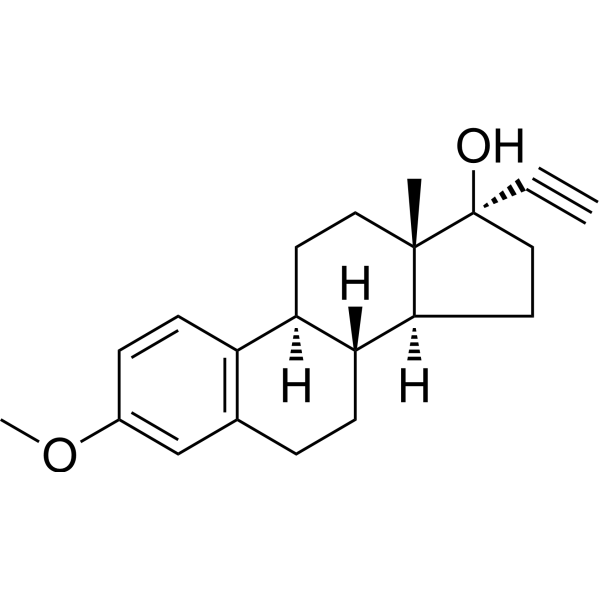 0 ImagesMestranol is an inactive proagent and becomes biologically active on conversion to ethinyl estradiol (EE). Mestranol acts as an estrogen receptor agonist. Mestranol combines with a progestin in vivo and can be used for the research of menopausal hormone or menstrual disorders. Mestranol is a click chemistry reagent, it contains an Alkyne group and can undergo copper-catalyzed azide-alkyne cycloaddition (CuAAc) with molecules containing Azide groups.
-
WAY-200070
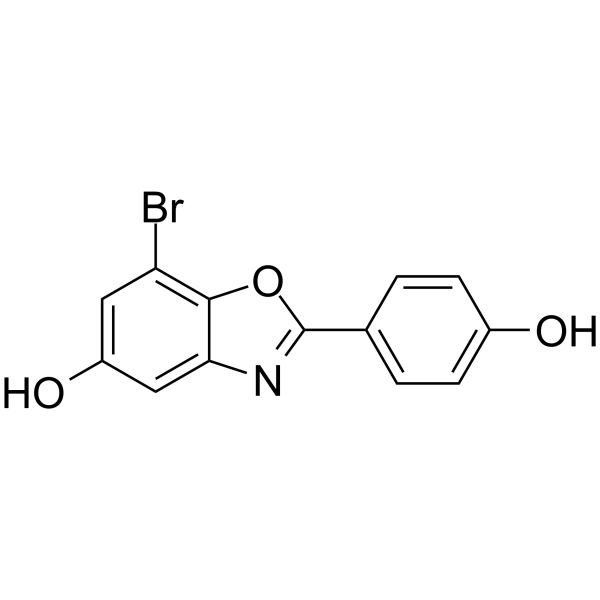 0 ImagesWAY-200070 is a selective estrogen receptor β (ERβ) agonist with an IC50 of 2.3 nM.
-
N-Desmethyltamoxifen hydrochloride
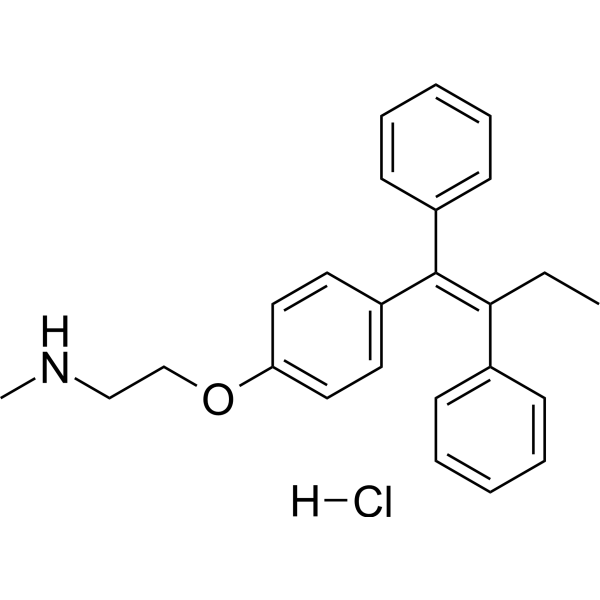 0 ImagesN-Desmethyltamoxifen hydrochloride is the major metabolite of tamoxifen in humans. N-Desmethyltamoxifen, a poor antiestrogen, is a ten-fold more potent protein kinase C (PKC) inhibitor than Tamoxifen. N-Desmethyltamoxifen hydrochloride is also a potent regulator of ceramide metabolism in human AML cells, limiting ceramide glycosylation, hydrolysis, and sphingosine phosphorylation.
-
Ethynyl Estradiol-d4
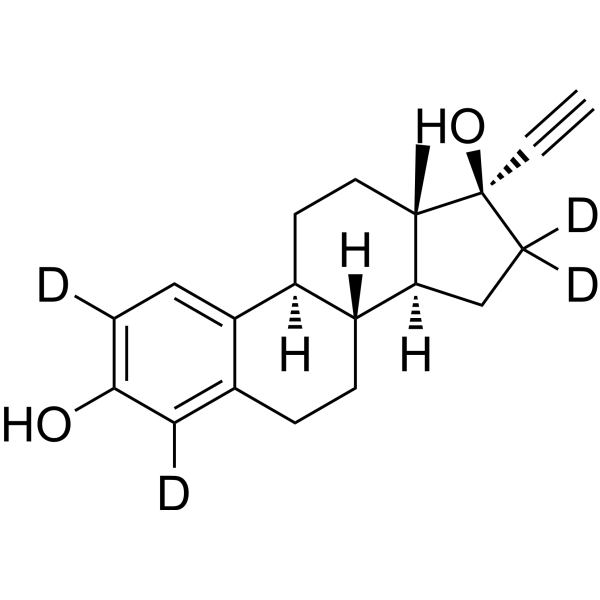 0 ImagesSynonyms: 17α-Ethynylestradiol-d4; Ethynylestradiol-d4Ethynyl Estradiol-d4 is the deuterium labeled Ethynyl Estradiol. Ethynyl Estradiol (17α-Ethynylestradiol;Ethynylestradiol) is an orally bio-active estrogen used in almost all modern formulations of combined oral contraceptive pills. Ethynyl Estradiol-d4 is a click chemistry reagent, it contains an Alkyne group and can undergo copper-catalyzed azide-alkyne cycloaddition (CuAAc) with molecules containing Azide groups.
-
Segetalin B
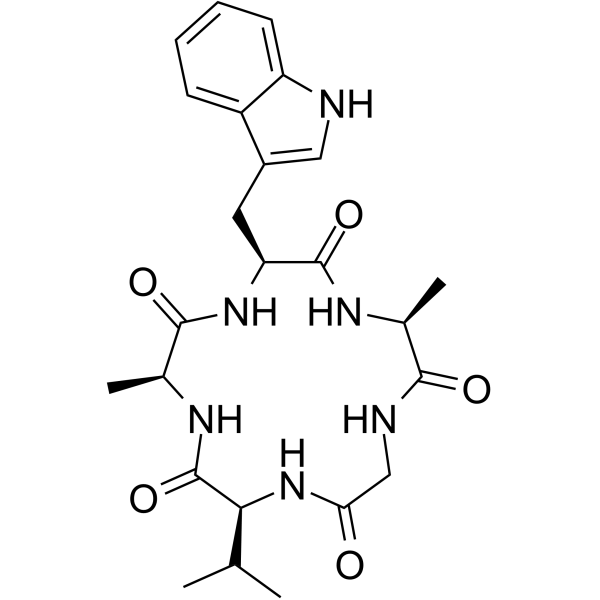 0 ImagesSegetalin B, an orally active cyclopentapeptide found in Vaccaria segetalis, possesses estrogen-like activity. Segetalin B promotes mineralization of ovariectomized rat-derived bone marrow mesenchymal stem cells (BMSCs) in vitro and increases the level of osteocalcin, BMP-2, ALP, and SIRT1 activity. Segetalin B is promising for research of post-menopausal osteoporosis (PMOP).
-
Licoflavone C
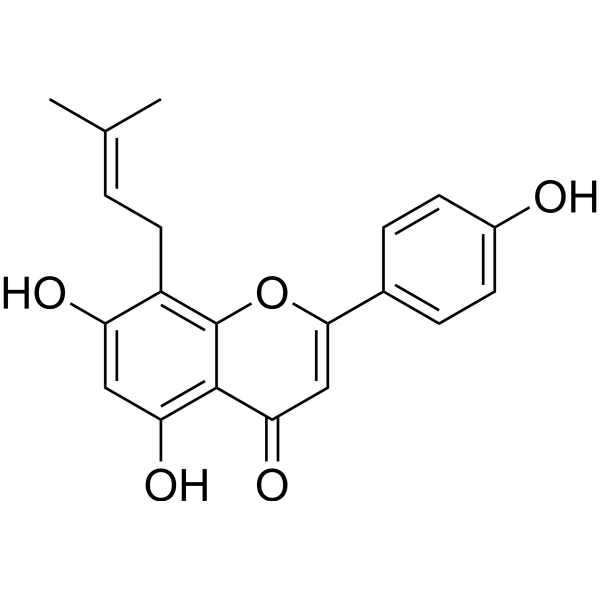 0 ImagesLicoflavone C is a broad-spectrum antiviral inhibitor with estrogen-like properties. Licoflavone C binds to viral endonuclease (CEN) and inhibits the replication of various bunyaviruses including severe fever with thrombocytopenia syndrome virus (SFTSV) and lymphocytic choriomeningitis virus in a non-substrate competitive manner. The IC50 values of Licoflavone C against SFTSV CEN and SFTSV CEN are 35.5 μM and 135.8 μM, respectively, and its Kd value against SFTSV CEN is 9.53 μM. After viral entry into cells, Licoflavone C reduces viral loads in mouse tissues in a dose-dependent manner, and exhibits extremely low cytotoxicity and genotoxicity. Licoflavone C induces apoptosis by increasing caspase 3/7 activity, blocks the cell cycle, and alleviates chemotherapy-induced chromosomal damage. Licoflavone C is applicable to the research on severe fever with thrombocytopenia syndrome and related viral infection mechanisms.
-
Etonogestrel
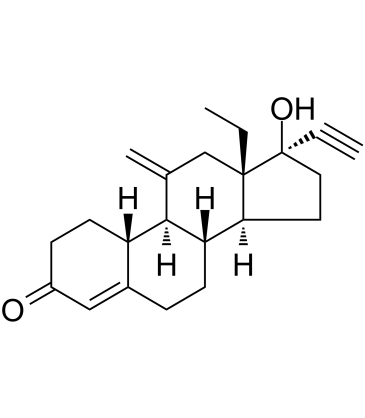 0 ImagesSynonyms: 3-Oxodesogestrel; 3-keto-DesogestrelEtonogestrel (3-Oxodesogestrel), a biologically active metabolite of progestin Desogestrel, binds with high affinity to progesterone receptors and estrogen receptors in the target organs. Etonogestrel induce FKBP51 mRNA and protein expression in cultured human endometrial stromal cells (HESCs).
-
LSZ-102
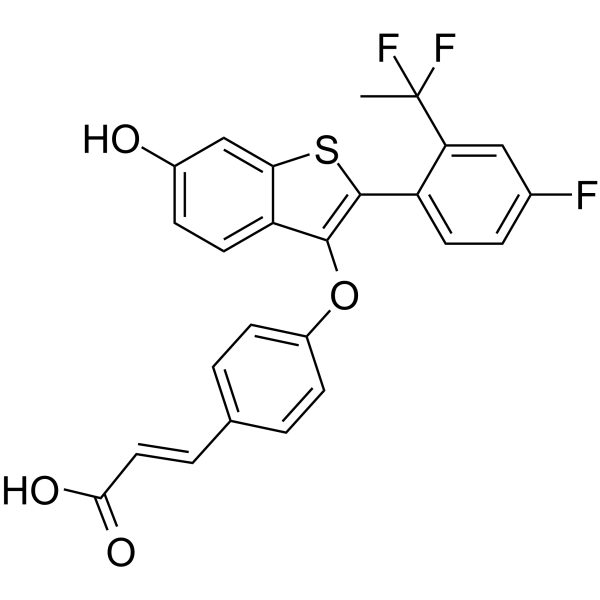 0 ImagesLSZ-102 is a potent, orally bioavailable, selective estrogen receptor degrader (SERD) with an IC50 value of 0.2 nM.
-
UT-34
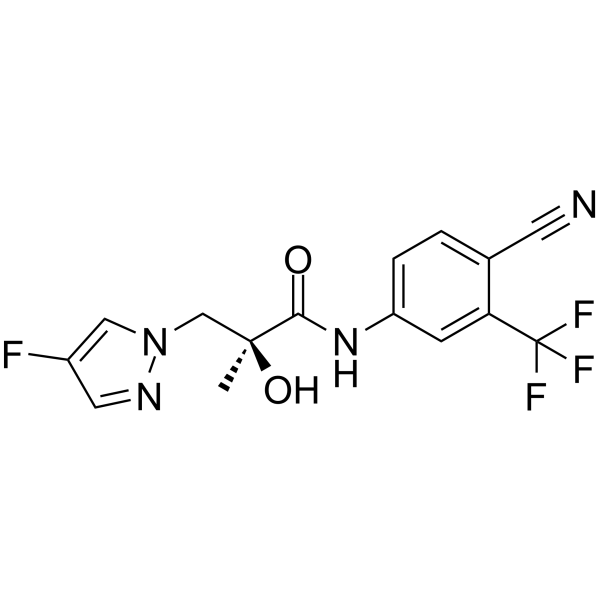 0 ImagesUT-34 is a potent, selective, orally bioactive second-generation pan-androgen receptor (AR) antagonist and degrader, with IC50 values of 211.7 nM, 262.4 nM, and 215.7 nM for wild-type AR, F876L-AR, and W741L-AR, respectively. UT-34 binds to the ligand-binding domain (LBD) and functional 1 (AF-1) domain of AR and requires the ubiquitin-proteasome pathway for AR degradation. UT-34 has anti-prostate cancer effects.
-
Galaxolide
 0 ImagesCat. No.: HY-W100026CAS No.: 1222-05-5Galaxolide is a polycyclic musk synthetic fragrance. Galaxolide possesses endocrine-disrupting activity and can exert anti-androgenic/estrogenic effects. Galaxolide exhibits in vivo androgenic activity in immature rats. Galaxolide can be used in studies related to endocrine disruption.
-
Hexestrol
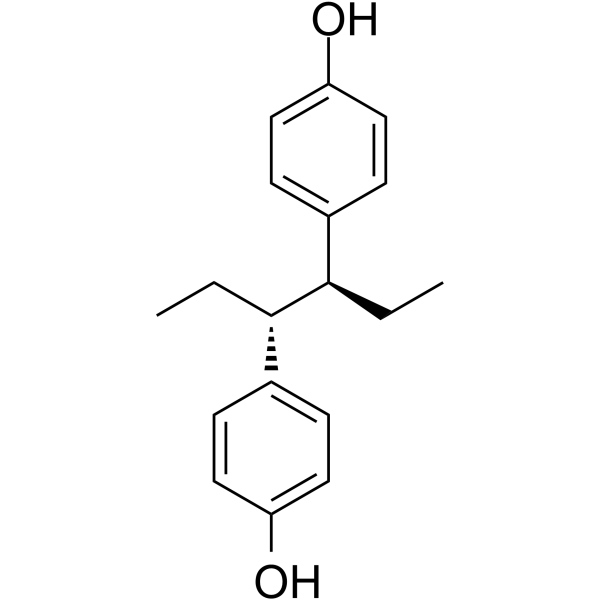 0 ImagesHexestrol is a nonsteroidal synthetic estrogen, with a Ki of 0.06 and 0.06 nM for estrogen receptor alpha (ERα) and ERβ. Hexestrol can be used for the research of the diseases caused by estrogen deficiencym, and it also can increase the weight of cattle.
-
DS45500853
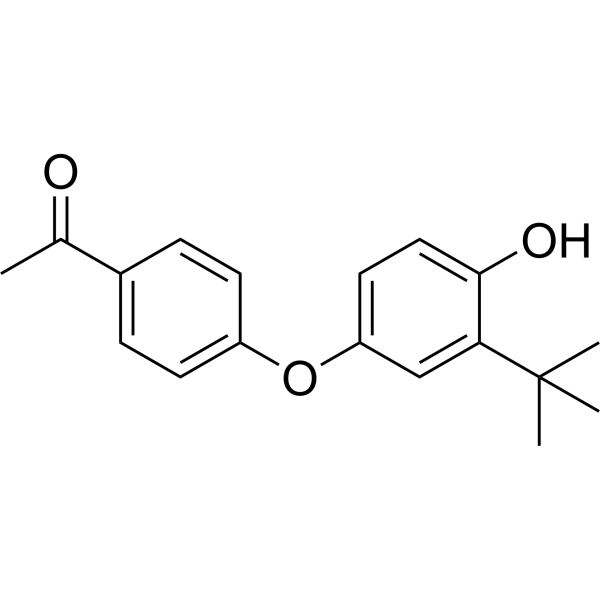 0 ImagesDS45500853 is an estrogen-related receptor α (ERRα) agonist. DS45500853 inhibits the binding between receptor-interacting protein 140 (RIP140) corepressor peptide (10 nM) and GST-ERRα ligand-binding domain (LBD; 1.2 μM) with an IC50 value of 0.80 μM. DS45500853 can be used for the research of metabolic disorders, including type 2 diabetes mellitus (T2DM).
-
(E)-4-Hydroxytamoxifen
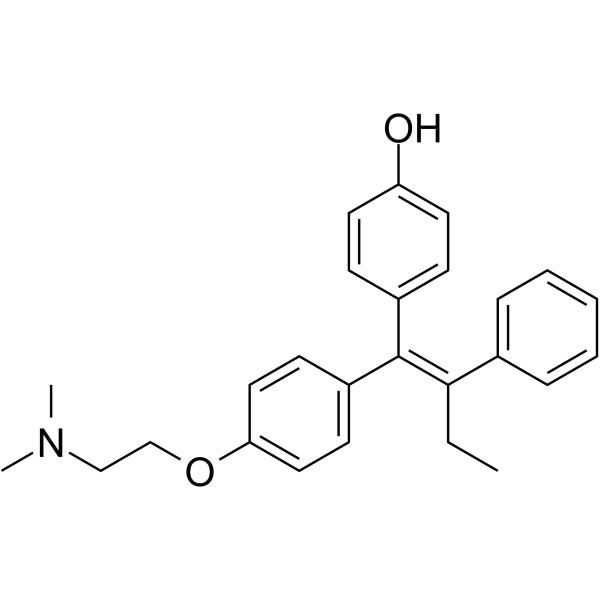 0 ImagesCat. No.: HY-16950BCAS No.: 174592-47-3Synonyms: (E)-Afimoxifene(E)-4-Hydroxytamoxifen ((E)-Afimoxifene), the less active isomer of (Z)-4-hydroxytamoxifen, is an estrogen receptor modulator.
-
ADX61623
 0 ImagesADX61623 is a potent follicle stimulating hormone (FSH) receptor (FSHR) negative allosteric modulator (NAM). ADX61623 shows luteinizing hormone receptor (LH-R) activity and is not active on thyroid-stimulating hormone (TSH) receptors. ADX61623 can be used for the study of estrogen dependent disease.
-
Chlorothalonil
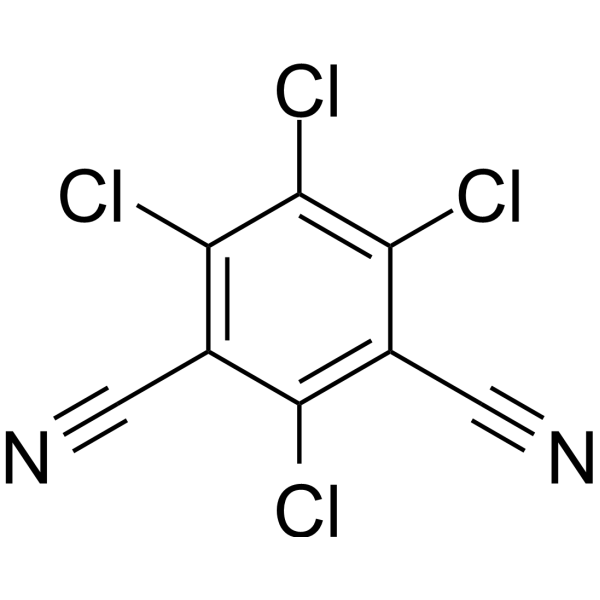 0 ImagesChlorothalonil is a broad-spectrum foliar fungicide with oral activity. Chlorothalonil can be used to combat fungal diseases in vegetable and crop leaves. Chlorothalonil can alter the microbial community in the soil. Chlorothalonil inhibits spermatogenesis. Chlorothalonil can cause intestinal epithelial barrier dysfunction and fetal toxicity.
-
Diethylstilbestrol-d8
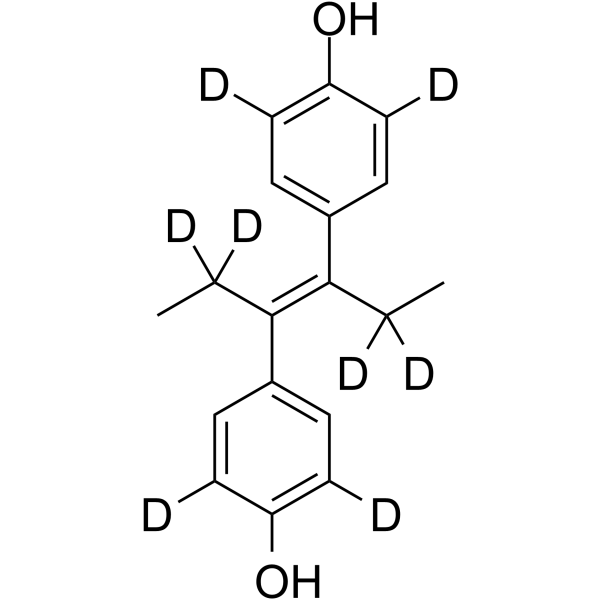 0 ImagesDiethylstilbestrol-d8 is the deuterium labeled Diethylstilbestrol. Diethylstilbestrol, a synthetic nonsteroidal estrogen used in the treatment of menopausal and postmenopausal disorders.
-
(-)-(E)-Guggulsterone
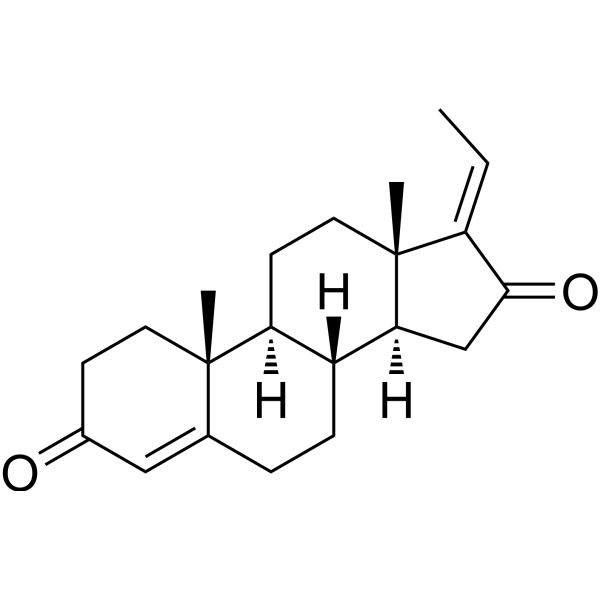 0 ImagesSynonyms: (E)-Guggulsterone(-)-(E)-Guggulsterone ((E)-Guggulsterone) is an orally active natural stereoisomer of Guggulsterone (HY-107738). (-)-(E)-Guggulsterone is an antagonist for the Farnesoid X Receptor (FXR) with an IC50 of 24.06 μM and possesses potent hypolipidemic properties. (-)-(E)-Guggulsterone suppresses dengue virus (DENV) replication by upregulating antiviral interferon responses by inducing HO-1 expression via Nrf2 activation. (-)-(E)-Guggulsterone exhibits antibacterial activities against Bacillus subtilis, Staphylococcus aureus and Pseudomonas aeruginosa. (-)-(E)-Guggulsterone has cardiac protective and antioxidant activities in rats.
-
FSHR agonist 1
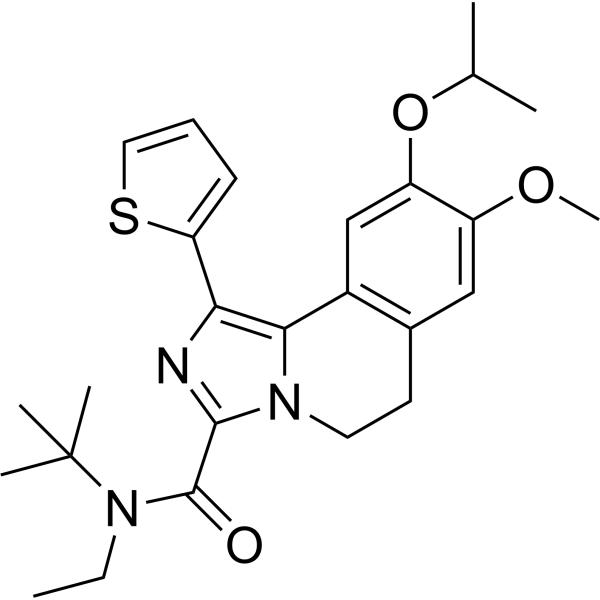 0 ImagesFSHR agonist 1 is a high affinity and allosteric follicle stimulating hormone receptor (FSHR) agonist with a pEC50 of 7.72. FSHR agonist 1 formes extensive interactions with the TMD to directly activate FSHR.




